


Data reconciliation
BloodHound Enterprise (BHE) will perform data reconciliation. That is, BHE will automatically update changes identified during subsequent data collections, such as the removal of group membership, role assignments, access control list changes, etc.HasSession edge reconciliation
HasSession edges are generated to indicate patterns of behavior rather than session active at any exact moment. For this reason, HasSession edges are only reconciled based on their retention/time-to-live expiring, rather than reconciling upon follow-on collections no longer seeing the active session. If you need to refresh session data immediately, an administrator can delete HasSession edges from Database Management before recollecting session data instead of waiting for the retention window to expire.Manual HasSession edge deletion is generally only necessary in BloodHound Community. In BloodHound Enterprise, HasSession edges reconcile automatically based on the configured retention period. Delete them manually only when you need to refresh session data immediately instead of waiting for that retention window to expire.
Data retention
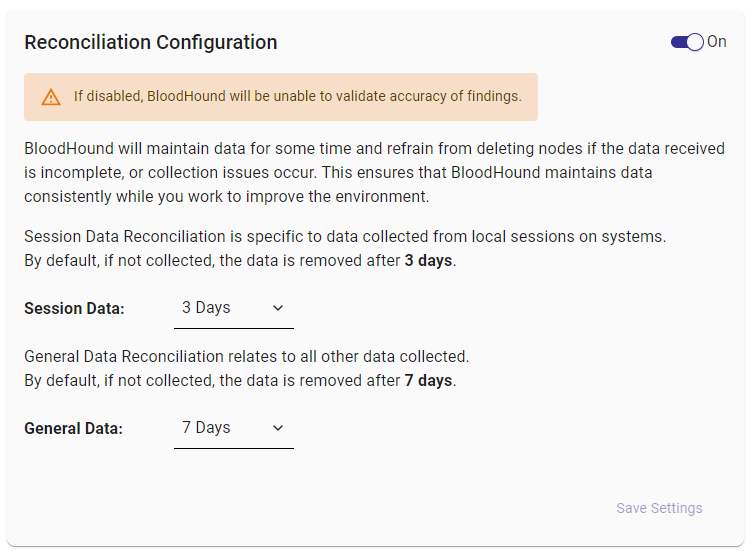
BloodHound Enterprise (BHE) implements data retention, i.e., a time-to-live where data that has not been collected and ingested for a certain period will get deleted from BHE. This retention period is configurable and is by default:- Session Data, i.e. HasSession edges: 3 days
- General Data, i.e. objects/nodes and relationships/edges, excluding HasSession edges: 7 days
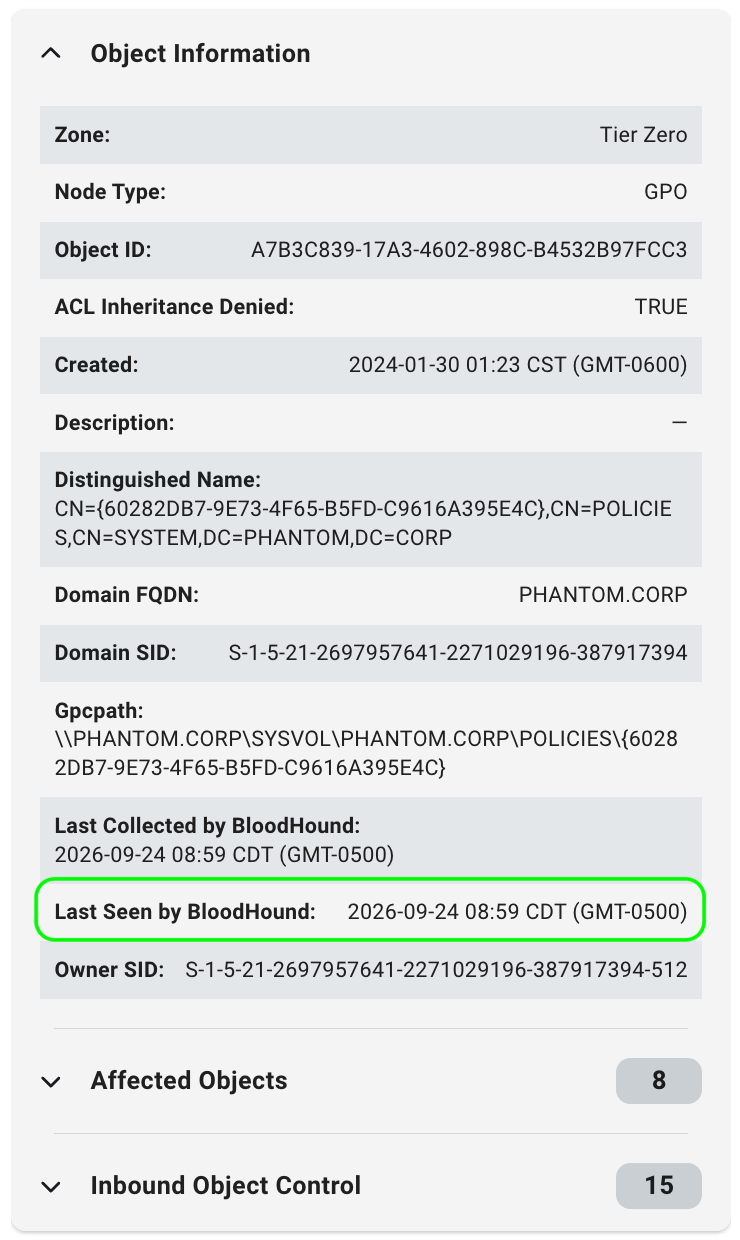
In cases where retention maintains visibility into an already resolved finding, the “Accept” feature may be used to hide nodes/principals in the “Attack Paths” page, see Accept attack path finding.